Geometric Tile Bathroom Floor: Stunning Ideas That Can Transform Small Spaces (7 Proven Design Wins)
Geometric Tile Bathroom Floor designs can dramatically upgrade your space with style, balance, and durability—discover expert ideas, layouts, and practical tips.
Introduction to Geometric Bathroom Flooring
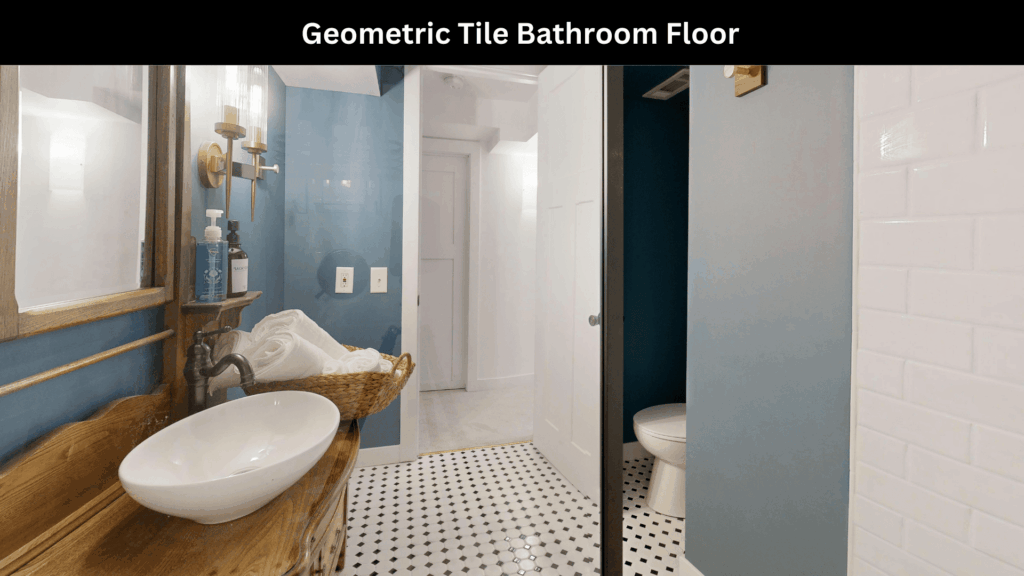
A bathroom floor may seem like a small detail, but it quietly sets the mood for the entire space. In recent years, homeowners and designers alike have leaned toward patterned surfaces that add personality without overwhelming the room. Among these, the Geometric Tile Bathroom Floor has emerged as a clear favorite, blending artistic flair with everyday practicality.
Geometric patterns rely on clean lines, repeating shapes, and balanced symmetry. When applied to bathroom floors, they create movement and visual depth—almost like a piece of functional art under your feet. Whether your style leans modern, vintage, or somewhere in between, geometric tiles offer remarkable flexibility.
From an expert design perspective, geometric flooring works because bathrooms are usually compact. A well-chosen pattern adds interest without requiring extra décor. Instead of cluttering the room with accessories, the floor itself becomes the focal point. And here’s the kicker—it doesn’t just look good; it performs well too.
Modern manufacturing techniques have made patterned tiles more durable, slip-resistant, and water-friendly than ever before. That means you no longer have to choose between beauty and safety. With thoughtful selection and planning, geometric bathroom flooring can last for decades while still looking fresh.
Why Geometric Patterns Work So Well in Bathrooms

Bathrooms are unique spaces. They face constant moisture, frequent cleaning, and heavy daily use. Geometric tiles thrive in this environment for several reasons.
First, patterns naturally disguise water spots, dust, and minor stains. Unlike solid-color floors that show every mark, geometric designs break up the surface visually. This makes the bathroom look cleaner, even between deep cleans.
Second, geometry creates balance. Symmetrical shapes bring a sense of order and calm—something we subconsciously appreciate in a space meant for routine and relaxation. Even bold patterns feel grounded when they follow repeating mathematical logic.
Third, geometric floors help define zones. In open or larger bathrooms, patterns can visually separate shower areas, vanities, and walkways without physical dividers. Designers often use this trick to maintain an open feel while still adding structure.
Lastly, trends come and go, but geometry is timeless. Humans have used geometric patterns in architecture for thousands of years. That historical staying power makes these tiles a safe yet stylish long-term investment.
Popular Geometric Tile Shapes for Bathroom Floors
Hexagon Tile Patterns
Hexagon tiles, often called “honeycomb” tiles, are among the most popular choices today. Their six-sided shape fits together seamlessly, creating a continuous flow across the floor.
Designers love hexagons because they feel modern yet classic. Small hex tiles add texture, while larger versions make a bold statement. They work especially well in minimalist or Scandinavian-inspired bathrooms.
Chevron and Herringbone Layouts
Chevron and herringbone patterns use rectangular tiles arranged in zigzag or staggered formations. These layouts introduce movement and energy, guiding the eye across the room.
They are particularly effective in narrow bathrooms, where the angled lines can make the space appear wider or longer. When done in neutral tones, these patterns feel elegant rather than busy.
Diamond and Rhombus Designs
Diamond-shaped tiles offer a more dramatic look. When aligned carefully, they create star-like or three-dimensional illusions. This style is ideal for homeowners who want a statement floor that feels custom and luxurious.
Choosing the Right Tile Material
Porcelain Tiles for Durability
Porcelain is often the top recommendation from industry professionals. It’s dense, water-resistant, and highly durable—perfect for bathroom conditions. Porcelain tiles also replicate the look of stone or cement while being easier to maintain.
Ceramic Tiles for Budget-Friendly Style
Ceramic tiles are slightly less dense but still suitable for bathroom floors. They’re more affordable and come in countless geometric designs. For low-traffic bathrooms, ceramic can be an excellent choice.
Natural Stone with Geometric Cuts
Marble, slate, or travertine tiles cut into geometric shapes deliver unmatched luxury. However, they require sealing and regular maintenance. Homeowners who choose stone should be prepared for extra care.
Color Theory and Visual Impact in Geometric Floors
Black-and-White Combinations
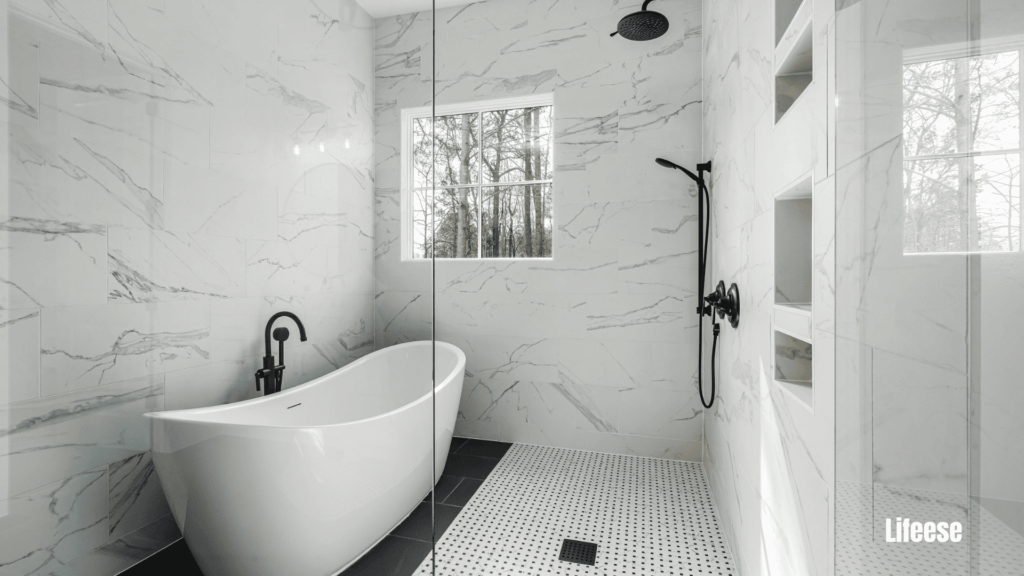
High-contrast palettes create timeless appeal. Black-and-white geometric floors feel crisp, clean, and elegant. They pair beautifully with brass fixtures or wooden vanities.
Neutral Palettes with Subtle Contrast
Soft grays, beiges, and taupes offer a calmer look. These tones are perfect for spa-like bathrooms where relaxation is key.
Bold Color Statements
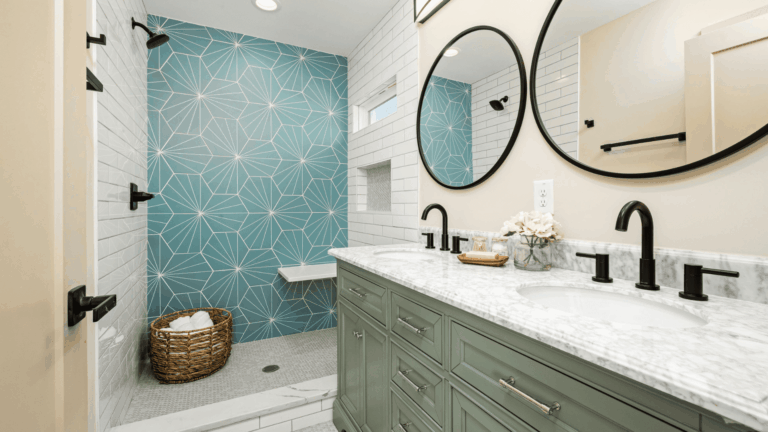
Deep blues, emerald greens, or terracotta shades inject personality. When using bold colors, designers recommend keeping walls and fixtures simple to avoid visual overload.
Small Bathroom vs Large Bathroom Applications
Making Small Bathrooms Look Bigger
In compact spaces, smaller tiles with repeating patterns create continuity. This visual flow tricks the eye into perceiving more space.
Statement Floors for Spacious Bathrooms
Larger bathrooms can handle oversized geometric tiles. Here, the floor often becomes the centerpiece, allowing other elements to remain understated.
Installation Patterns and Layout Techniques
Straight Lay vs Offset Patterns
Straight-lay installations feel clean and modern, while offset patterns introduce movement. The choice depends on the desired mood.
Border and Feature Zone Layouts
Some homeowners frame their floor with a subtle border or use geometric tiles only in central zones. This approach adds sophistication without overwhelming the room.
Slip Resistance, Safety, and Practical Considerations
Safety should never be overlooked. Look for tiles with textured finishes or matte surfaces. According to industry standards outlined by the Tile Council of North America, slip-resistant ratings are essential for wet areas like bathrooms.
Maintenance and Long-Term Care
Regular sweeping and mild cleaning solutions are usually enough. Avoid harsh chemicals, especially on patterned or stone tiles, to preserve their finish.
Cost Factors and Budget Planning
Costs vary by material, pattern complexity, and installation method. Simple geometric layouts are more affordable, while intricate designs require skilled labor and higher budgets.
Design Mistakes to Avoid
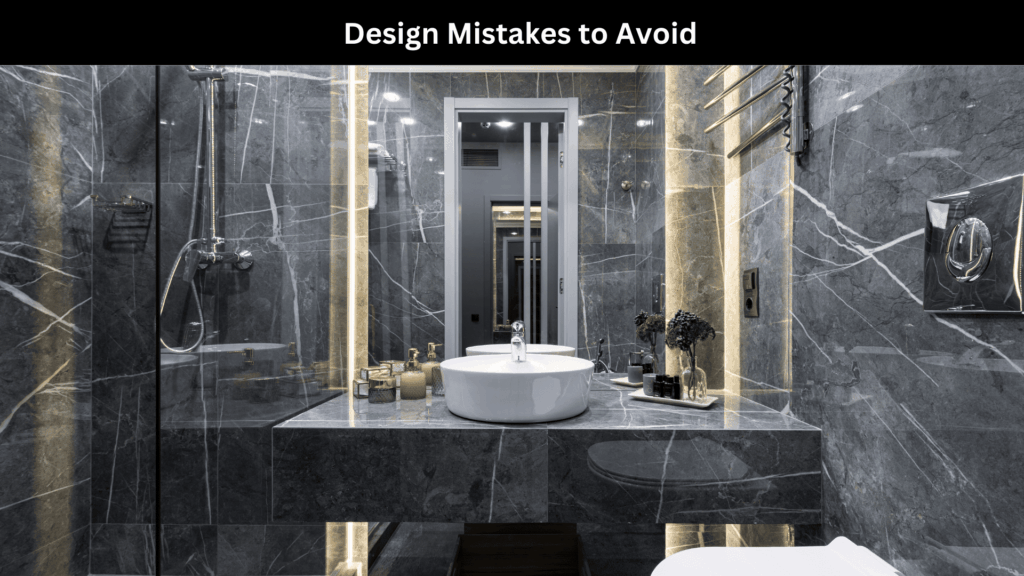
- Choosing overly busy patterns in tiny bathrooms
- Ignoring grout color impact
- Mixing too many design styles
A thoughtful plan prevents costly regrets.
FAQs
Are geometric tiles too trendy?
No. Their mathematical foundation makes them timeless.
Do patterns make bathrooms feel smaller?
Not when chosen wisely; they often enhance spatial perception.
Is grout hard to maintain?
Modern sealants make upkeep simple.
Can geometric tiles work with underfloor heating?
Yes, especially porcelain tiles.
Are they suitable for wet rooms?
Absolutely, with proper slip-resistant finishes.
How long do these floors last?
With good care, several decades.
Conclusion
A Geometric Tile Bathroom Floor is more than a design trend—it’s a smart blend of aesthetics, function, and longevity. When selected thoughtfully, it enhances visual appeal, improves safety, and adds lasting value to your home.